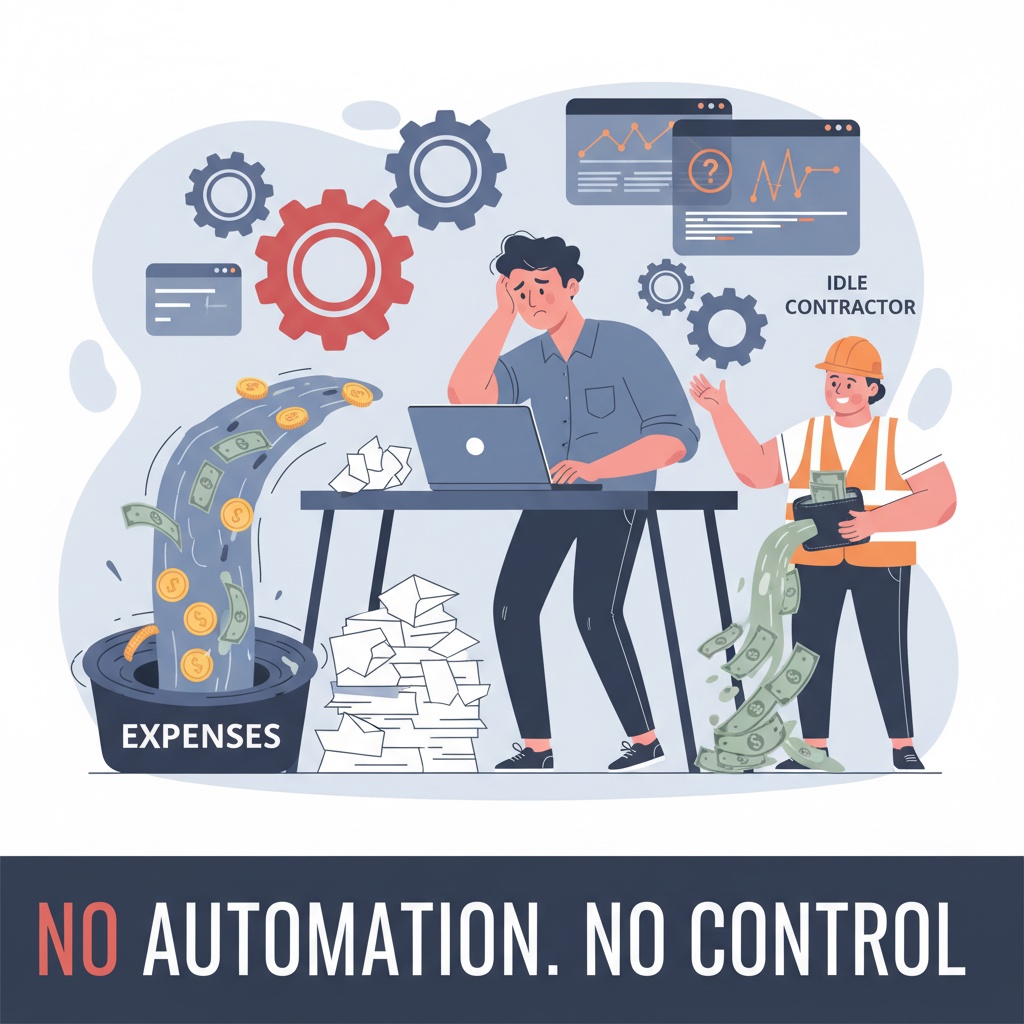
Prevent financial leaks and accidental payments with robust workflow automation. Learn how to implement smart vendor management, payment, and offboarding systems using Make.com, AI, and integrated tools to safeguard your business finances.
In the fast-paced world of small business, freelancing, and agency operations, efficiency is everything. Yet, a silent killer often lurks in the shadows of growth: uncontrolled financial outflow. This isn't about malicious fraud; it's about the insidious creep of forgotten subscriptions, unchecked vendor payments, and recurring invoices that continue long after a service has concluded. These seemingly minor oversights can accumulate into significant financial leaks, eroding profitability and diverting crucial resources from strategic growth.
Imagine discovering that your company has been consistently paying a contractor for months, perhaps even a year, after their project concluded. The service stopped, but the recurring payment didn't. This scenario is far more common than many business owners realize, especially as teams grow and responsibilities become distributed. It's a clear indicator of a critical gap in operational processes - a gap that automation is uniquely designed to fill.
At Automaton Automations, we understand that every dollar counts. That's why we champion the strategic implementation of workflow automation to not only enhance efficiency but to build a robust financial fortress around your business. This guide will demonstrate how a proactive approach to vendor management, payment processing, and offboarding through smart workflows can prevent costly mistakes and secure your financial future.
The Silent Drain: Understanding Uncontrolled Payments
As a business expands, so does its ecosystem of vendors, contractors, and software subscriptions. What starts as a manageable list of a few suppliers can quickly balloon into dozens, even hundreds, of entities requiring regular payments. Without a centralized, automated system, managing these financial relationships becomes a breeding ground for error and oversight.
The core problem isn't a lack of intent, but a lack of systemic control. When a project ends, or a subscription is no longer needed, the manual step of terminating the recurring payment often falls through the cracks. Responsibilities shift, communication breaks down, and the payment continues, silently siphoning funds from your accounts. This can be exacerbated by:
- Distributed Ownership: In small or growing teams, who is responsible for what can become ambiguous. Everyone assumes someone else is handling the termination, leading to collective inaction.
- Lack of Centralized Records: Without a single source of truth for all contracts, payment terms, and project statuses, it's nearly impossible to track obligations effectively.
- Manual Processes: Relying on spreadsheets and memory for managing recurring payments is inherently prone to human error. A simple missed line item or an unupdated entry can lead to prolonged, unnecessary expenditures.
- Subscription Overload: The proliferation of SaaS tools means businesses often subscribe to multiple services, many of which go unused but continue to incur costs due to forgotten renewals.
The financial impact of these uncontrolled payments extends beyond the direct cost. It impacts cash flow, complicates accurate budgeting, and can lead to uncomfortable conversations with contractors or employees who have unwittingly continued to receive payments. It distracts from core business activities and erodes trust in internal financial oversight.
Beyond Manual: Why Spreadsheets and Memory Fail
Many businesses attempt to manage these complexities with manual tracking systems - often a meticulously maintained spreadsheet or a shared calendar. While these tools can serve a purpose in the early stages, they are fundamentally inadequate for scalable financial management.
The inherent flaws of manual systems include:
- Human Error: Data entry mistakes, forgotten updates, or misinterpretations of terms are inevitable when tasks are manual.
- Lack of Real-time Visibility: Spreadsheets are static. They don't update themselves, nor do they provide real-time alerts or insights into spending patterns.
- Communication Gaps: Manual systems struggle to facilitate clear, auditable communication between team members regarding payment approvals, contract statuses, and termination requests.
- Time Consumption: Reconciling accounts, chasing approvals, and manually tracking invoices consume valuable hours that could be better spent on strategic activities.
- Scalability Challenges: As the number of vendors and subscriptions grows, the manual workload becomes unsustainable, increasing the likelihood of errors and financial leaks.
The solution isn't to work harder at manual tasks; it's to work smarter by implementing automated systems that manage these financial workflows with precision and minimal human intervention.
The Automation Antidote: Building Bulletproof Payment & Vendor Management Workflows
The key to preventing financial leaks and optimizing operational efficiency lies in integrating automation into every stage of your vendor and payment lifecycle. This involves setting up smart workflows that trigger actions, send alerts, and maintain a verifiable audit trail without constant manual oversight.
Phase 1: Automated Vendor Onboarding & Contract Management
The process of preventing accidental payments begins before a single dollar is spent. A robust onboarding workflow ensures that all critical vendor information is captured and stored centrally, laying the groundwork for precise management.
- Standardized Onboarding Forms: Use digital forms (e.g., Typeform, JotForm) to collect essential vendor details, including contact information, payment preferences, contract terms, start and end dates, and whether the payment is recurring or one-off.
- Centralized Contract Repository: Automatically push submitted form data into a structured database like Airtable, Notion, or a dedicated contract management system. This becomes your single source of truth for all vendor agreements.
- Key Data Extraction with AI: Leverage AI tools to automatically extract critical dates (start, end, renewal, notice periods) and payment terms from contracts and populate your database. This minimizes manual data entry errors and ensures accuracy.
- Automated Reminders for Contract Review: Set up workflows in platforms like Make.com to trigger automated reminders for contract reviews or renewal decisions well in advance of key dates. This prevents contracts from auto-renewing unexpectedly.
Phase 2: Intelligent Payment Approval & Tracking
Once a vendor is onboarded, automation streamlines the payment process, ensuring that every expense is approved and tracked transparently.
- Automated Invoice Processing: Implement systems that automatically capture invoice data, match it against purchase orders or contracts, and route it for approval based on predefined rules (e.g., amount thresholds, department). AI-powered expense management tools can extract details like amount, merchant, and category from receipts and invoices, reducing manual effort.
- Approval Workflows: Design multi-level approval workflows using tools like Make.com that send notifications to relevant stakeholders (managers, finance team) via Slack, email, or a dedicated approval portal. Payments are only released once all necessary approvals are secured.
- Integrated Accounting Software: Seamlessly connect your payment approval system with your accounting software (e.g., Xero, QuickBooks Online). This ensures real-time synchronization of financial data, eliminating manual data entry and simplifying reconciliation.
- Payment Scheduling & Execution: Automate the scheduling of payments based on due dates and approved terms. For recurring payments, these should be explicitly linked to contract end dates or project milestones.
Phase 3: The Critical Offboarding Automation
This is where many businesses fail, leading to significant financial losses. A robust offboarding workflow is crucial to prevent payments from continuing unnecessarily.
- Trigger for Termination: The moment a project concludes, a contract expires, or a subscription is canceled, this action should trigger an automated offboarding sequence. This trigger could be a status change in your project management tool or CRM, or an alert from your contract management system.
- Automated Payment Cessation: The primary action in this sequence is to stop all recurring payments associated with that vendor or subscription. This could involve an automated instruction to your payment processor or an alert to the finance team for manual termination with a strict deadline.
- Access Revocation: Beyond payments, the offboarding workflow should automatically revoke access to internal systems, shared drives, and software licenses, enhancing security and preventing unnecessary license costs.
- Documentation & Archiving: Ensure all relevant project data, communications, and final invoices are archived and easily retrievable for future reference.
- Confirmation & Audit Trail: The system should log every step of the offboarding process, providing a clear, auditable trail that verifies payment cessation and resource recovery.
Phase 4: Proactive Subscription Management & Audits
Beyond individual vendors, businesses accumulate numerous software subscriptions. Managing these requires a dedicated, automated approach.
- Dedicated Subscription Tracker: Utilize a specialized tool or an Airtable base to log every software subscription, including renewal dates, costs, and usage.
- Automated Renewal Alerts: Set up reminders well in advance of renewal dates, allowing time to evaluate usage, negotiate terms, or cancel if no longer needed.
- AI for Usage Analysis: Employ AI tools to analyze software usage patterns, identifying underutilized licenses that can be eliminated, leading to significant cost savings.
- Regular Automated Audits: Schedule automated reports that highlight all active subscriptions and their costs, prompting regular human review to ensure all active services are truly essential.
Key Tools for Your Automated Financial Fortress
Building these sophisticated workflows doesn't require complex coding. Modern workflow automation platforms and AI tools for entrepreneurs provide user-friendly interfaces to connect your existing systems and orchestrate intelligent processes.
- Workflow Automation Platforms:
- Make.com: A powerful visual automation builder that allows you to connect thousands of apps without code. It's ideal for creating complex, multi-step financial workflows, from invoice processing to automated offboarding sequences.
- Zapier: Excellent for simpler integrations and connecting a wide array of business applications.
- Data Hubs & Databases:
- Airtable & Notion: Highly flexible platforms for building custom databases to manage vendors, contracts, projects, and subscriptions. They serve as central repositories for all critical financial information.
- Accounting & Expense Management Software:
- QuickBooks Online, Xero: Essential for financial record-keeping. Automation platforms integrate with these to synchronize data, automate reconciliation, and generate reports.
- Expensify, Fyle, Ramp: AI-powered tools that automate receipt capture, expense categorization, and approval workflows, providing real-time visibility into spending.
- AI for Financial Oversight:
- Custom GPTs & AI Agents: Can be trained to monitor spending patterns, flag unusual transactions, extract key data from documents, or even provide real-time answers to financial queries based on your integrated data.
- Natural Language Processing (NLP): Used in tools to analyze contract text, identify key clauses, and ensure compliance.
- Payment Processors:
- Stripe, PayPal, Bill.com: Automating payment initiation and termination through these platforms, linked to your workflow automation tools, ensures precise control over financial transactions.
Building Your Automation Blueprint: A Step-by-Step Guide
Implementing these financial automations might seem daunting, but a structured approach makes it manageable.
- Audit Your Current State: Begin by cataloging all your vendors, contractors, and subscriptions. Document current manual processes for onboarding, payment, and offboarding. Identify pain points and areas where money is most likely to leak. Review bank and credit card statements diligently.
- Define Your Ideal Workflow: Map out how you wish these processes would work. What information needs to be captured? Who needs to approve what? What triggers a payment or a termination? Think in terms of inputs, actions, and outputs.
- Choose Your Core Tools: Select a primary workflow automation platform (like Make.com) and a central data repository (like Airtable) that will serve as the backbone of your system. Ensure they integrate with your existing accounting software and payment processors.
- Start Small, Iterate Fast: Don't try to automate everything at once. Pick one critical workflow - for example, automating the offboarding of a freelancer or managing a specific type of recurring subscription. Build and test this automation thoroughly.
- Document & Train: Once a workflow is live and stable, document it comprehensively. Train your team members on how to use the new automated processes and the importance of adhering to them. Clear accountability is key.
- Regular Review & Optimization: Schedule quarterly reviews of your automated financial systems. Are they working as expected? Are there new tools or AI capabilities that could further enhance efficiency or security? Financial workflow automation is an ongoing process of refinement.
Common Pitfalls to Avoid
While automation offers immense benefits, avoiding certain traps is crucial for successful implementation:
- Over-engineering from the Start: Trying to build the perfect, most complex system on day one can lead to paralysis. Start simple, get a win, then expand.
- Ignoring Human Elements: Automation streamlines tasks, but human oversight, communication, and strategic decision-making remain vital. Ensure your team understands their role alongside the automated systems.
- Lack of Clear Ownership: Even with automation, someone needs to be responsible for monitoring the systems, reviewing alerts, and making ultimate decisions.
- Inadequate Testing: Always test your workflows with real-world scenarios before full deployment. A small error in logic can have significant financial consequences.
- Failing to Adapt: The digital landscape evolves. Be prepared to update and optimize your automations as your business needs change or as new, more powerful tools become available.
The Automaton Advantage: Proactive Financial Health
Embracing AI automation and intelligent workflow automation transforms your financial operations from reactive firefighting to proactive management. You gain real-time visibility, reduce human error, and free up valuable time for strategic tasks.
With Automaton Automations, you're not just implementing tools; you're building a resilient, scalable system that protects your bottom line. We specialize in crafting bespoke Make automations and integrating cutting-edge AI workflows that ensure your business runs with unparalleled efficiency and financial integrity. From robust vendor management automation to seamless payment automation, we empower small business owners, freelancers, and agencies to achieve true operational efficiency and sustainable growth.
Stop the financial drain and start building a future where every payment is intentional, every subscription is justified, and every dollar works for your business, not against it.
FAQ
Q1: How can I identify all recurring payments currently active in my business?
A1: Start by thoroughly auditing all bank statements and credit card statements for the past 12-24 months. Look for consistent charges from specific vendors or services. Cross-reference these with your existing contracts and subscription lists. Implement financial workflow automation tools that can analyze spending patterns and flag recurring charges automatically.
Q2: Is it difficult to set up automation for financial workflows if I have no coding experience?
A2: Not at all. Platforms like Make.com are designed for non-technical users with intuitive drag-and-drop interfaces. They allow you to connect various apps and create complex workflows without writing a single line of code. Many platforms also offer templates and extensive documentation to guide you.
Q3: What's the single most important automation to implement to prevent accidental payments?
A3: While a comprehensive system is ideal, automating your offboarding process for contractors and subscriptions is arguably the most critical. This ensures that when a service or project concludes, the corresponding recurring payment is automatically terminated, eliminating the primary source of financial leaks. This should be coupled with automated reminders for contract renewal/termination decisions.